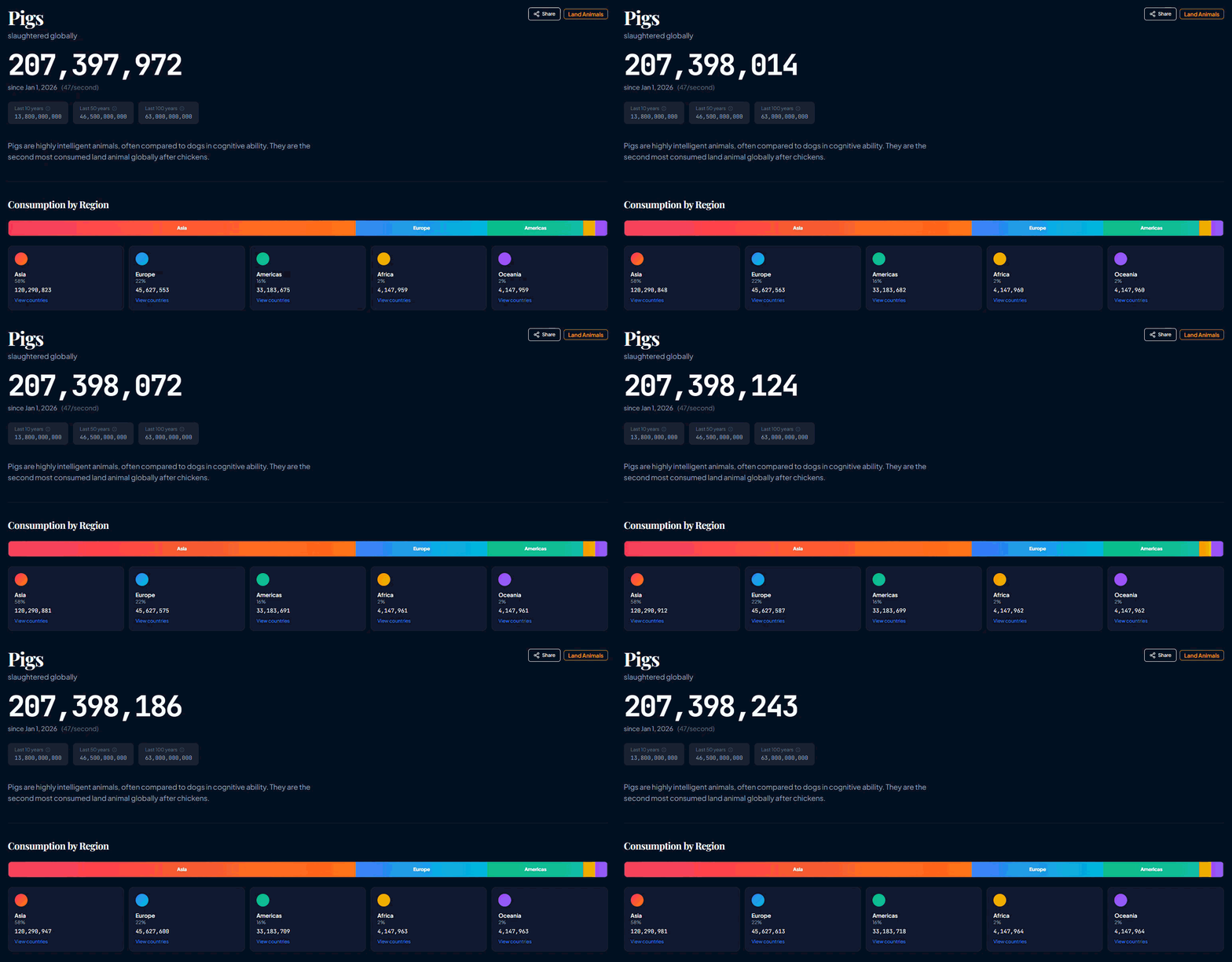
Approximately 1.5 billion pigs are slaughtered globally each year Visualization
Data Analysis
What This Visualization Shows
This data visualization displays "Approximately 1.5 billion pigs are slaughtered globally each year" and provides a clear visual representation of the underlying data patterns and trends. The visualization focuses on There is no agenda with this post. I am simply sharing information I found online.
Directly from the website.
Methodology and Sources
Information about how data is calculated and sourced
[HumanConsumption.Live](http://humanconsumption.live/)
displays real time estimates derived from annual production statistics and research based estimates. Live counts are calculated by converting annual totals into a per second rate and projecting forward over time.
Live counts
The main counters show estimated totals since the selected start date such as January 1 of the current year. These figures are calculated projections and do not represent exact real world counts at any moment.
Historical totals
The ten fifty and one hundred year totals are estimated using historically weighted rates rather than projecting today's rate backward. Earlier decades contribute less because global population and industrial animal agriculture were significantly lower before the mid twentieth century.
Scope and definitions
Figures generally represent animals slaughtered or harvested for human consumption. Where noted totals may reflect farmed production such as aquaculture or combined sources. Some categories particularly sea life and bycatch are subject to underreporting and variation in monitoring practices.
Data sources
Primary sources include the FAO Food and Agriculture Organization of the United Nations and research based estimates compiled by Fishcount.org.uk along with other published datasets where applicable.
Note
All figures are estimates intended to communicate scale rather than precise totals. Methods and assumptions may be refined as additional data becomes available., which allows us to understand complex relationships and insights within the data through visual storytelling.
Deep Dive into the Topic
Technology data visualization provides insights into digital trends, user behavior, and system performance that drive innovation and improve user experiences. This field encompasses everything from website analytics and app usage patterns to system performance monitoring and cybersecurity threat visualization.
Digital analytics visualizations help product managers understand user journeys, identify feature adoption patterns, and optimize user interfaces. System performance dashboards enable IT professionals to monitor server health, network traffic, and application response times. Social media and web analytics reveal content engagement patterns, user demographics, and digital marketing effectiveness.
The rapid evolution of technology creates new opportunities for data visualization in emerging fields like artificial intelligence, Internet of Things (IoT), and blockchain analytics. These technologies generate vast amounts of data that require innovative visualization approaches to make them understandable and actionable. Technology data visualization not only helps manage complex systems but also enables the development of better products and services through data-driven insights.
Data Analysis and Insights
The patterns revealed in this visualization demonstrate the importance of systematic data analysis in understanding complex phenomena. By examining different data segments, time periods, and categorical breakdowns, we can identify trends that inform strategic planning and decision-making processes.
Statistical analysis of this data reveals variations across different dimensions that provide insights into underlying drivers and relationships. These patterns help identify areas of opportunity, potential risks, and key performance indicators that can guide future actions and resource allocation.
The analytical approach used in this visualization enables comparison across different categories, time periods, or geographic regions, revealing insights that support evidence-based decision-making. This type of analysis is essential for organizations seeking to optimize performance and understand complex market dynamics.
Significance and Applications
This data visualization has important implications for understanding trends and patterns that affect decision-making across multiple sectors. The insights derived from this analysis can inform policy development, business strategy, resource allocation, and operational improvements.
For analysts, researchers, and decision-makers, this type of data visualization provides essential insights for strategic planning and performance optimization. Whether addressing operational challenges, market analysis, or policy development, understanding data patterns helps create more effective strategies and solutions.
The broader significance lies in how this information contributes to our understanding of complex systems and relationships. This knowledge helps predict future trends, identify potential challenges, and develop more informed approaches to problem-solving and opportunity identification.
Comments
Loading comments...
Leave a Comment
About the Author

Alex Cartwright
Senior Data Visualization Expert
Alex Cartwright is a renowned data visualization specialist and infographic designer with over 15 years of experience in...